4 hr
War Tunnel & Siege Sites Tour with Veteran Guide
Explore Sarajevo's conflict history through the Tunnel of Hope, Olympic ruins, and panoramic viewpoints
Reserve
Hand-picked by our editors — only the best 5 experiences from 12 reviewed.
Verified partners for every tour, free cancellation where available, and instant confirmation on every booking.
4 hr
Explore Sarajevo's conflict history through the Tunnel of Hope, Olympic ruins, and panoramic viewpoints
Reserve
3 hr
Walk through the underground lifeline that saved a city during Europe's longest modern siege
Reserve
5 hr
Five-hour journey through centuries of history, from Ottoman bazaars to siege tunnels and abandoned bobsled tracks
ReservePrices from verified partners. Availability updates in real time at checkout. Free cancellation policies apply where shown.
The landmarks, rooms, and views travelers on this tour remember — all visible on a single visit.
Features original artifacts and exhibits detailing the city's survival during the war.
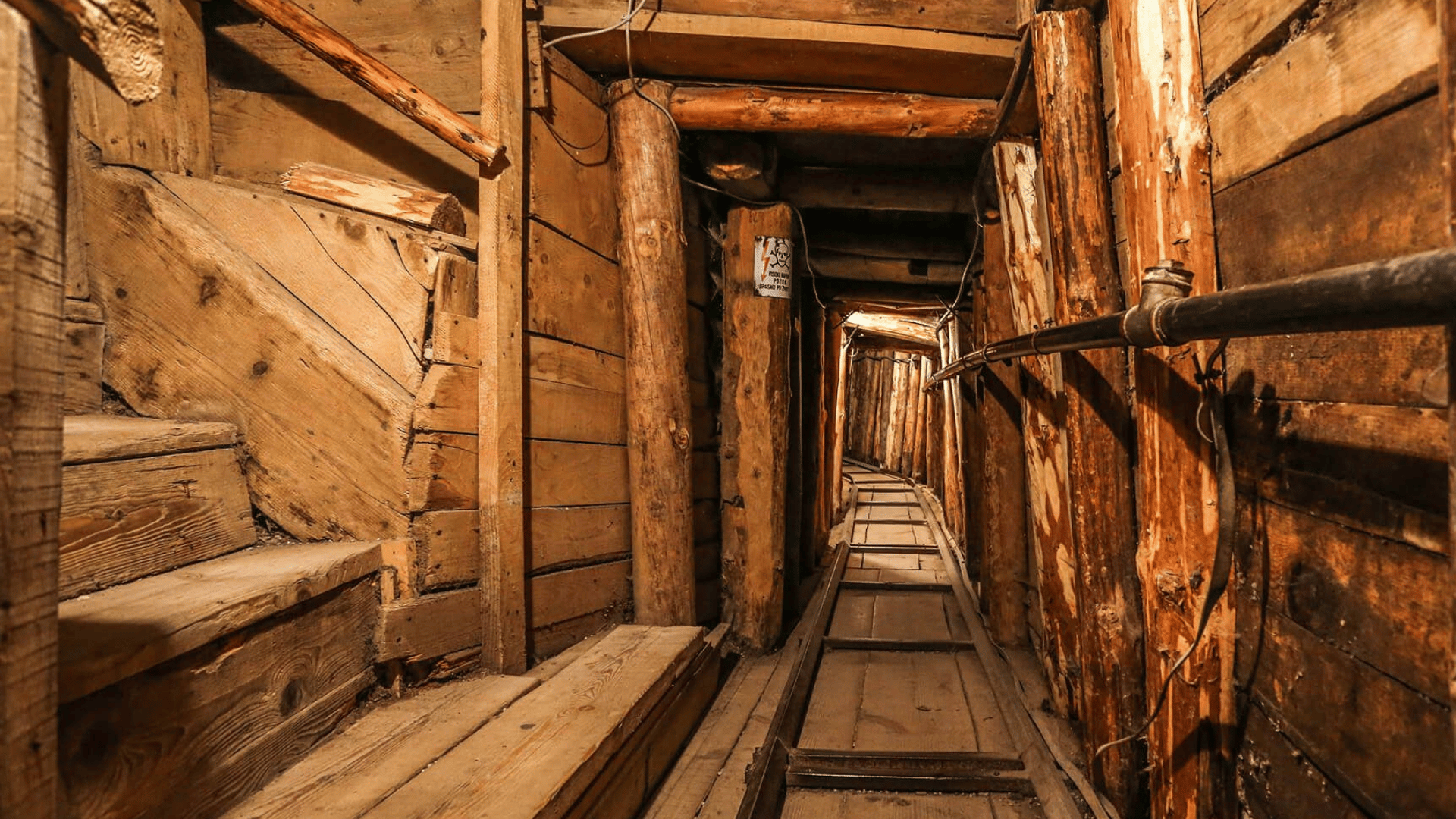
The preserved 20-meter section of the original underground passage used for supplies.
Dedicated space reflecting on the history and humanitarian impact of the blockade.
Exhibits showcasing tools and items manufactured by citizens during the siege.
Large artifacts and debris from the war era displayed in the garden.
These experiences complement each other, as visitors who seek a localized focus on the Tunnel of Hope often find the broader Sarajevo City Siege Tour provides the essential context for the Bosnian War.
| Feature | Top pick Tunnel Museum | Siege City Tour |
|---|---|---|
Scope of history |
Focused on B-O tunnel site | Covers entire city siege geography |
Physical access to tunnels |
Included entry to tunnel segment | Rarely includes tunnel entrance |
Time commitment |
1.5–2 hours | 3–4 hours |
Depth of veteran narrative |
Expert museum curation focus | Personalized storytelling from survivors |
Logistical ease |
Requires transit to Tuneli 1 | Usually includes hotel pick-up |
| See tickets → |
Verdict: Choose the sarajevo war tunnel tour if you prioritize an immersive walk through the memorial site, or select the city-wide option to grasp the wider historical landscape through sarajevo war tunnel tour tours and sarajevo war tunnel tour tickets.
Choose your ticket, select your date, and reserve in under two minutes. Secure checkout handled by our verified partner.
Instant confirmation by email, with a mobile voucher you can save offline. No printing, no queuing at a collection desk.
Arrive at the entrance, show your voucher on your phone, and walk in. Most tickets include priority or skip-the-line access.
Practical details for your visit straight from our verified partners — hours, access, rules, and how to get there.
Tuneli 1
Main gate area
Take the tram to Ilidža and transfer to the bus to Donji Kotorac.
Request a direct drop-off at Tuneli 1 from the city center.
Casual, modest clothing is appropriate. Wear comfortable walking shoes as the surface near the Sarajevo war tunnel tour site can be uneven.
Large backpacks and bulky luggage are prohibited inside the Sarajevo war tunnel tour museum. Secure your belongings before arrival as there is no storage available.
Photography is permitted in most exhibit areas. Respect signage regarding flash usage during your Sarajevo war tunnel tour.
The museum entrance and initial displays are accessible. Portions of the original Sarajevo war tunnel tour path feature low ceilings and narrow passageways.
Mobile phones are permitted for personal use. Maintain silence while viewing the memorial displays of the Sarajevo war tunnel tour.
The site is suitable for older children interested in history. Parents should monitor younger visitors closely within the tunnel section of the Sarajevo war tunnel tour.
No food or beverages are allowed inside the exhibition halls. Water may be consumed in outdoor areas surrounding the Sarajevo war tunnel tour location.
Pets are not permitted inside the museum or the tunnel grounds. Only service animals are allowed on the Sarajevo war tunnel tour premises.
The site marks a critical point of the Siege of Sarajevo. Visitors often combine their Sarajevo war tunnel tour with other local history sites.
Best time to go, insider tips, nearby landmarks, and the cancellation fine print — flip through to skim what matters to you.
How crowds, weather, and events shift across the year.
Mild temperatures make walking the Sarajevo war tunnel tour comfortable. Expect lighter crowds during April and May.
The underground tunnel remains cool during the hot Sarajevo summer. This is peak season, so arrive by 09:00.
Pleasant weather for exploring the outdoor history of the Sarajevo war tunnel tour. September offers a calm atmosphere.
Crowds are minimal, though the approach to the Sarajevo war tunnel tour can be icy and cold.
Small details that turn a good visit into a great one.
Bring exact change in BAM as card payments are not accepted for the 20 BAM fee. This speeds up your entry for your Sarajevo war tunnel tour.
Visit at 09:00 to avoid the mid-day arrival of large group tours. This allows for a more personal experience.
The tunnel temperature stays cool year-round. Bring a light layer even during summer visits.
Plan your Sarajevo war tunnel tour in the morning and Vrelo Bosne in the afternoon to maximize your trip.
Turn off the flash when photographing delicate, light-sensitive artifacts in the museum.
Confirm your identity or student status at the desk if applicable for specific fee categories.
Non-bookable sights within a short walk — free to visit, easy to pair.
A peaceful spring park at the foot of Mount Igman.
A large spa and recreation area nearby.
An Ottoman-era stone bridge spanning the Bosna River.
Site of the 1984 Winter Olympic events.
Flexible, no hidden fees.
Tickets are non-refundable once purchased. The regular entrance fee is 20 BAM per adult, cash only.
Hand-picked options within walking distance — pick a district for vibe, or a specific hotel for convenience.
Large resort hotel with extensive amenities.
Located in the Ilidža district near public transit.
Simple lodging options for history-focused travelers.
Between April 1992 and November 1995, a 800-metre underground passage beneath the runway of Sarajevo International Airport was the besieged city's only connection to the outside world. Built by hand in four months by Bosnian Army engineers working around the clock, the tunnel ran from the Butmir neighbourhood, in government-controlled territory, to Dobrinja, on the far side of the airport perimeter. It was narrow — 1.6 metres high, less than one metre wide — and lit by a string of salvaged bulbs powered by a generator. Over three years, more than one million people passed through it, carrying food, medicine, ammunition, and hope in both directions. The Sarajevo war tunnel tour offers a rare chance to stand inside a preserved 25-metre section of the original passage, now part of the Tunnel Museum, housed in the Kolar family home where the entrance was concealed during the siege. The museum displays photographs, personal letters, military equipment, and documentary footage that trace the tunnel's construction and the daily mechanics of survival under artillery fire. Veteran guides — many of whom defended the city or worked inside the tunnel — lead the most compelling visits, answering questions that archival text cannot. The tunnel was not a simple evacuation route; it was a supply artery that enabled Sarajevo to endure 1,425 days of encirclement, the longest siege of a capital city in modern history. Today, the site stands as both memorial and historical record. The Kolar house retains its wartime scars: shrapnel marks on the walls, sandbags in the courtyard, the wooden boards that once hid the tunnel entrance. Outside, the runway is visible across open ground, a reminder of how exposed every crossing was under sniper fire. The Tunnel of Hope — Tunel spasa in Bosnian — earned its name from the families who queued in darkness for hours, waiting to send a message, retrieve a relative, or smuggle a sack of flour back into the city. Walking its damp concrete floor, beneath a ceiling low enough to force a stoop, visitors understand the tunnel not as metaphor but as engineering, labour, and lived desperation compressed into 800 metres of underground air.

"Over three years, more than one million people passed through it, carrying food, medicine, ammunition, and hope in both directions."
A step-by-step walkthrough of the visit — what you'll see, how long each stage takes, and the details that matter.
You arrive at Tuneli 1, a residential street in Butmir, five kilometres southwest of Sarajevo's Old Town. The Kolar house sits behind a low wall, its exterior pocked with shrapnel scars. You enter through the family courtyard, where sandbags still frame the doorway, and step into the museum's first room. Photographs line the walls: civilians queuing at the tunnel entrance, soldiers hauling ammunition crates, children waiting for news of relatives. A short documentary plays on loop, narrated by survivors. You descend a narrow staircase into the tunnel itself. The air is cool and damp, the ceiling low enough that you walk bent forward, one hand trailing the concrete wall. Electric bulbs cast a dim yellow glow every few metres. After 25 metres, the passage ends at a reinforced door; the remainder of the tunnel, running beneath the airport runway, was sealed after the war. You return to daylight and walk the outdoor section, where sections of the original wooden reinforcement and rail tracks used to move supplies are displayed. Your guide — often a war veteran — pauses at the runway fence, pointing out the exposed ground that snipers controlled. The tour closes in the upper rooms of the house, where uniforms, maps, and personal letters are preserved behind glass.
The site is open daily from 09:00 to 17:00.
The regular entrance fee is 20 BAM, payable in cash at the Sarajevo Tunnel entrance.
The museum entrance is accessible, but the narrow tunnel section of the Sarajevo war tunnel tour has limited access.
No, large backpacks and luggage are prohibited at the Sarajevo war tunnel tour site.
Prohibited items include weapons, explosives, drones, and large bags at the Sarajevo war tunnel tour.
Arriving between 09:00 and 13:00 is recommended to avoid mid-day tour bus crowds during your Sarajevo war tunnel tour.
Yes, you may take photos, but please avoid using flash near sensitive artifacts at the Sarajevo war tunnel tour.
Food and drink are not permitted inside the museum exhibition of the Sarajevo war tunnel tour.
You can reach the Sarajevo war tunnel tour via public transport to Ilidža or by taxi from Sarajevo center.
Yes, children can visit, but parental supervision is required throughout the Sarajevo war tunnel tour.
No, tickets are non-refundable once purchased for the Sarajevo war tunnel tour.