4 hr
Sarajevo War Tunnel & Siege Sites with Veteran Guide
Explore the Tunnel of Hope, Olympic bobsled track, and key wartime landmarks with a survivor guide
Reserve
Hand-picked by our editors — only the best 5 experiences from 12 reviewed.
Verified partners for every tour, free cancellation where available, and instant confirmation on every booking.
4 hr
Explore the Tunnel of Hope, Olympic bobsled track, and key wartime landmarks with a survivor guide
Reserve
3 hr
Walk through the underground lifeline that sustained a besieged city during Europe's longest modern siege
Reserve
4 hr
Journey through the longest modern siege with a local survivor who lived it
ReservePrices from verified partners. Availability updates in real time at checkout. Free cancellation policies apply where shown.
The landmarks, rooms, and views travelers on this tour remember — all visible on a single visit.
Entrance structure of tunnel
Original dirt walls of tunnel
Glass display cases with artifacts
Exterior memorial garden area
They complement each other; most visitors who do both call the guided experience more immersive for city context, while the Tunnel provides a raw, focused look at survival history. You may find sarajevo war walking tour tickets essential for understanding the siege geography, while the museum offers a deeper dive into the engineering of the lifeline.
| Feature | Top pick Sarajevo Tunnel | Guided City Siege Tour |
|---|---|---|
Content Focus |
Specific site engineering | Broad urban siege narrative |
Historical Context |
Primary source site | Expert-led synthesis |
Transportation Support |
Self-guided transit | Often inclusive of transit |
Physical Requirement |
Low (mostly static) | Moderate (city walking) |
Depth of Personal Narrative |
Localized survival focus | Curated storyteller perspective |
Budget Allocation |
20 BAM (conservation fee) | Variable tour pricing |
| See tickets → |
Verdict: Choose the Sarajevo Tunnel for its tangible, physical impact, or book sarajevo war walking tour tours if you prefer a narrative-driven exploration of Sarajevo war landmarks to grasp the larger conflict.
Choose your ticket, select your date, and reserve in under two minutes. Secure checkout handled by our verified partner.
Instant confirmation by email, with a mobile voucher you can save offline. No printing, no queuing at a collection desk.
Arrive at the entrance, show your voucher on your phone, and walk in. Most tickets include priority or skip-the-line access.
Practical details for your visit straight from our verified partners — hours, access, rules, and how to get there.
Tuneli 1, Butmir
Main visitor center access
Take bus 32 from Ilidža to the last stop. It is a short walk from there to the Sarajevo Tunnel.
A direct taxi is the fastest way from Sarajevo city center. Confirm the price with the driver.
Dress modestly as this is a memorial site. Comfortable walking shoes are required for the Sarajevo Tunnel paths.
Large bags are discouraged due to the confined space of the Sarajevo Tunnel. Security checks may be in place.
Photography is permitted for personal use. Avoid using flash inside the Sarajevo Tunnel exhibitions.
The Sarajevo Tunnel site has limited wheelchair access due to the original architecture. Portions of the exterior exhibits are accessible.
Mobile phones are permitted but should be silenced. Reception can be weak within the Sarajevo Tunnel.
The Sarajevo Tunnel is appropriate for older children. Parents should note the somber historical context.
No food or drink is permitted inside the Sarajevo Tunnel museum area. Water is recommended for summer visits.
Pets are not permitted at the Sarajevo Tunnel. Service animals are admitted with prior notification.
The Sarajevo Tunnel acts as a primary memorial. Visitors often combine this with a broader sarajevo war walking tour.
Best time to go, insider tips, nearby landmarks, and the cancellation fine print — flip through to skim what matters to you.
How crowds, weather, and events shift across the year.
Expect higher temperatures and increased visitors. Arrive at 08:30 to see the Sarajevo Tunnel without crowds.
Mild weather perfect for a sarajevo war walking tour. Fewer tourists visit the Sarajevo Tunnel in October.
Small details that turn a good visit into a great one.
Arrive between 08:30 and 10:30 to navigate the Sarajevo Tunnel comfortably. This is the best window for a sarajevo war walking tour experience.
Carry 20 BAM in cash for the conservation fee. Credit cards may not always be accepted at the Sarajevo Tunnel entrance.
Non-bookable sights within a short walk — free to visit, easy to pair.
A peaceful spring park at the foot of Mount Igman. This natural landmark is a popular local retreat.
Flexible, no hidden fees.
As a conservation site, entrance fees are non-refundable. Please confirm your schedule before arrival at the Sarajevo Tunnel.
Hand-picked options within walking distance — pick a district for vibe, or a specific hotel for convenience.
This area offers numerous hotels near the Sarajevo Tunnel. Ideal for travelers starting a sarajevo war walking tour.
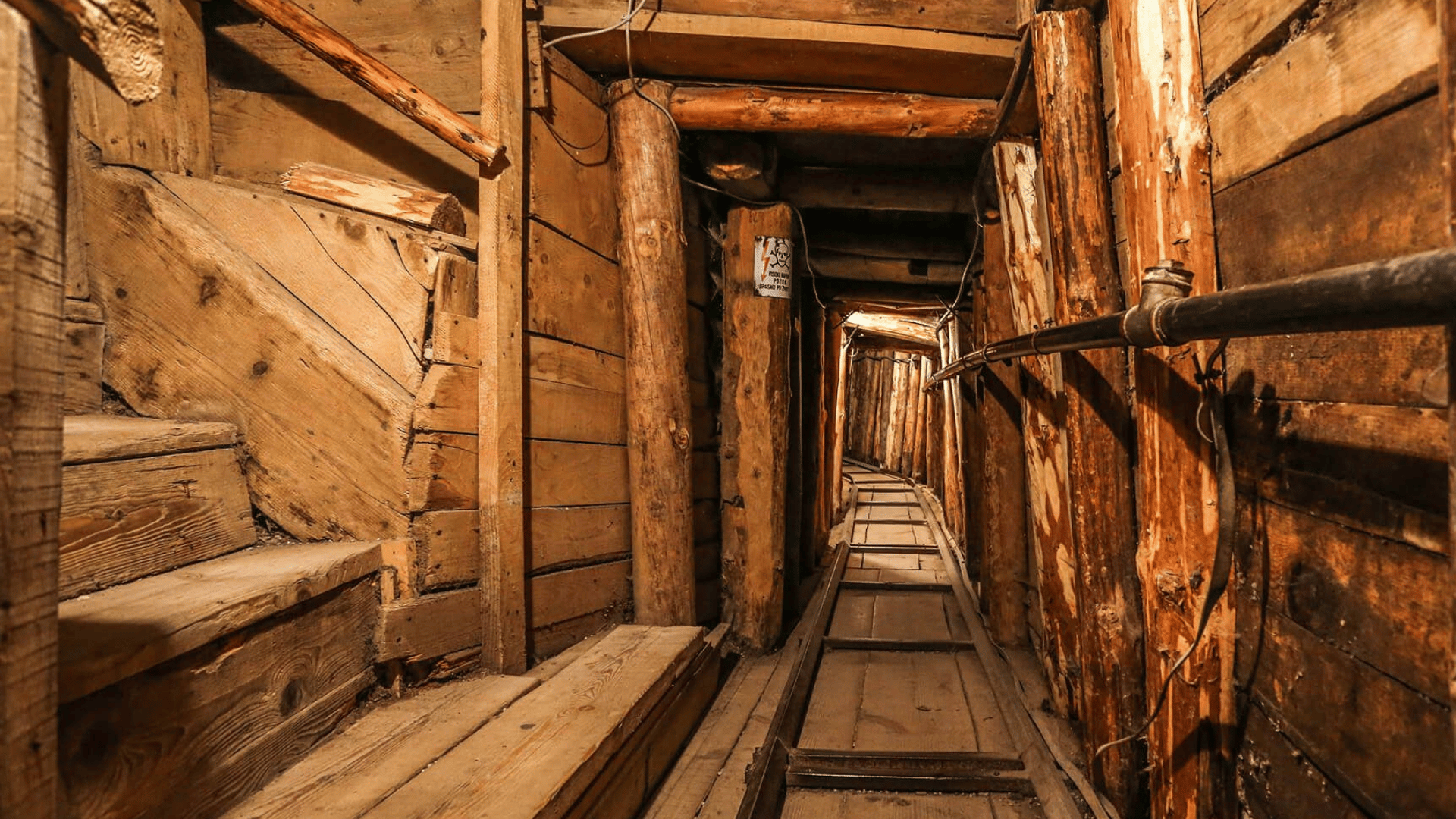
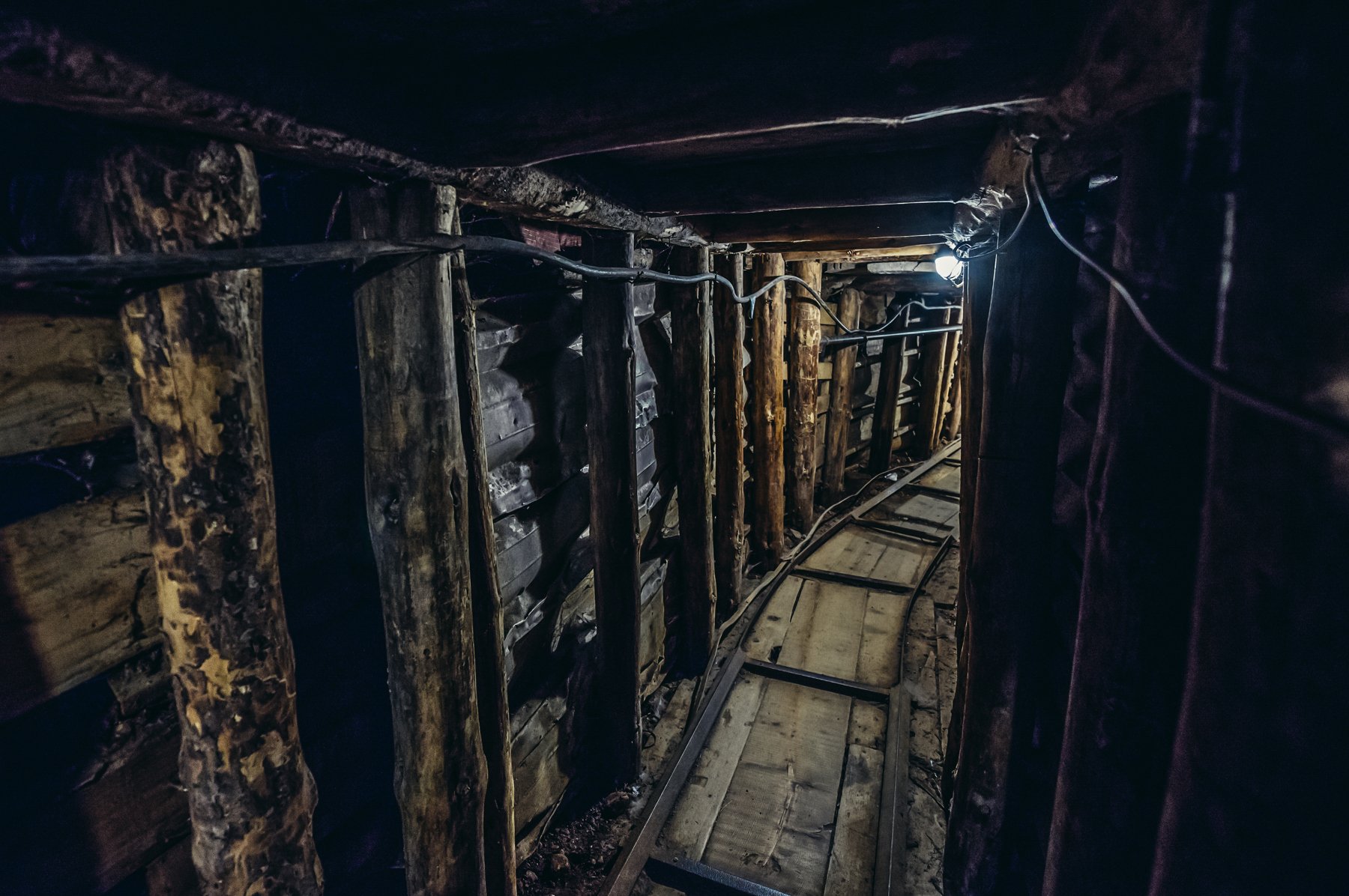
Between April 1992 and February 1996, Sarajevo endured 1,425 days under siege — the longest blockade of a capital city in the history of modern warfare. Serbian forces encircled the valley, cutting water, electricity, and all road access while an estimated 11,541 civilians died from shelling and sniper fire. The only artery to the outside world was an 800-metre tunnel dug by hand beneath the airport runway, completed in July 1993. It carried food, medicine, fuel, and refugees in both directions, earning its name as the Tunnel of Hope. Today the preserved tunnel entrance and adjacent museum stand in Butmir, a southwestern suburb where the family home of the Kolar family served as the covert entrance point. Twenty metres of the original passageway remain accessible to visitors. Above ground, sandbags, photographs, and personal testimonies line the rooms where fighters and civilians once waited their turn to crawl beneath the tarmac. The tunnel measured just 1.6 metres high and one metre wide; traversing its full length took thirty minutes in the dark. Sarajevo war walking tour experiences extend beyond the tunnel itself, tracing the siege perimeter through neighborhoods still marked by mortar scars and bullet-pocked facades. Veteran guides — many of whom served as soldiers or aid workers during the conflict — lead small groups to Sniper Alley, the Olympic bobsled track repurposed as an artillery position, and the Lion Cemetery where rows of white marble grave markers record deaths by birthdate, most between the ages of eighteen and thirty-five. These siege sites form a continuous historical landscape across the city, visible in repaired bridges, rebuilt libraries, and the Sarajevo Roses — red resin-filled craters that commemorate locations where shells killed three or more people. The Tunnel Museum opens daily from 08:30 to 17:00, charging a 20 BAM conservation fee per adult. Guided tours from the city center typically include round-trip transport, museum admission, and two to four additional siege landmarks. Arrival before 10:30 avoids the midday coach groups that compress the narrow tunnel walkway. The experience is neither sanitized nor abstracted; it is raw testimony rendered in concrete, metal, and memory.

"The tunnel measured just 1.6 metres high and one metre wide; traversing its full length took thirty minutes in the dark."
A step-by-step walkthrough of the visit — what you'll see, how long each stage takes, and the details that matter.
You leave Sarajevo's center in a small van, crossing the Miljacka River and climbing past apartment blocks still pitted with shrapnel. Thirty minutes later you arrive at a modest house in Butmir, its garden entrance marked only by a low sign. Inside, your guide — a former soldier or civilian defender — walks you through rooms filled with uniforms, ration tins, and grainy photographs of faces too young for the weapons they carried. You descend a narrow staircase into the tunnel itself. The walls are damp concrete, the ceiling low enough that you stoop as you move forward. Twenty metres in, the passage ends at a steel gate; beyond it, the remaining 780 metres have collapsed or been sealed. You surface into daylight and cross to the outdoor exhibits: a section of rail track that carried supply carts, a field telephone, a stretcher. Your guide recounts specific nights — the sound of shells, the weight of a fuel canister, the decision to send a child through. From Butmir you may continue to Sniper Alley, where your guide points to the high-rise windows used by marksmen, or to the bobsled track on Mount Trebević, now a graffiti-covered relic of the 1984 Olympics. Each stop layers the geography of daily survival onto the city you thought you knew.
The Sarajevo Tunnel is open daily from 08:30–17:00. This schedule applies to all sarajevo war walking tour visitors.
Yes, there is a 20 BAM conservation fee for the Sarajevo Tunnel. This is required for all adult sarajevo war walking tour tickets.
Children are welcome, though the history of the Sarajevo Tunnel is quite serious. Many sarajevo war walking tour operators suggest it for older kids.
Yes, items like weapons and large bags are banned at the Sarajevo Tunnel. Review your sarajevo war walking tour details for the full list.
You can reach the Sarajevo Tunnel by taxi or bus 32 from Ilidža. Many sarajevo war walking tour guides include transit coordination.
Accessibility is limited due to the historical structure of the Sarajevo Tunnel. Confirm specific needs with your sarajevo war walking tour provider.
Yes, personal photography is allowed. Most sarajevo war walking tour guests capture the entrance of the Sarajevo Tunnel.
The best arrival window is 08:30–10:30. Avoiding mid-day crowds improves the quality of any sarajevo war walking tour.
Yes, Vrelo Bosne is nearby. You can combine it with a trip to the Sarajevo Tunnel as part of a longer sarajevo war walking tour.